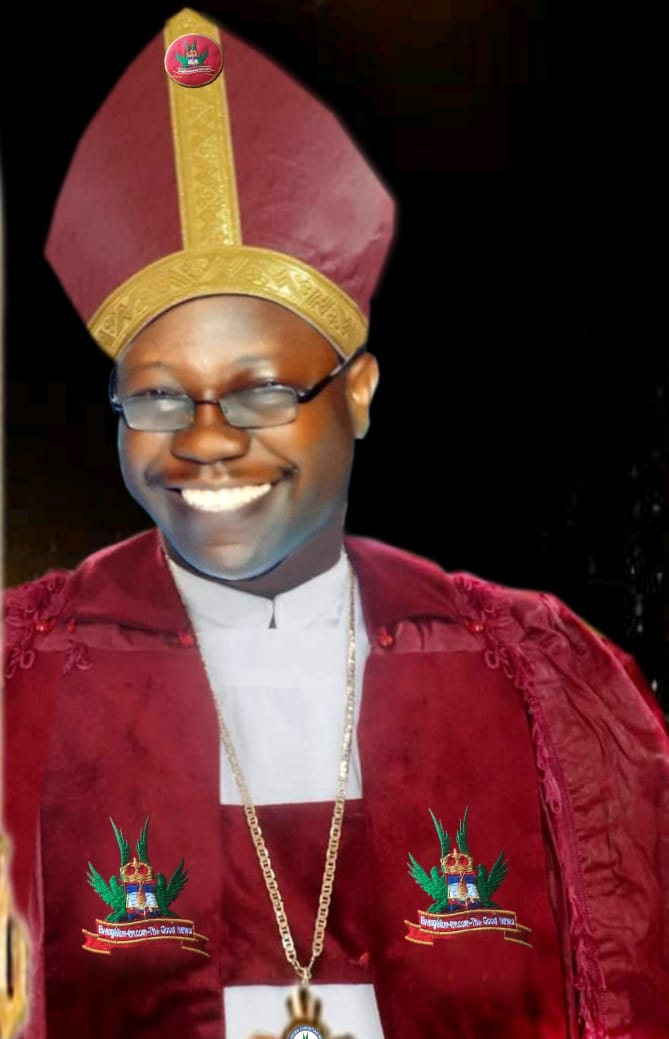
PSK 128. Sermon – THE PROPHET’S VOICE – DIVINE MESSENGER IN A WORLD OF CONFUSION
✝️🦅👑🍇👑❤️🔥
*PSK 128. THE PROPHET’S VOICE – DIVINE MESSENGER IN A WORLD OF CONFUSION*
🌹 Welcome to Sunday, the *15th day of February 2026.* This is OUR ACCEPTABLE YEAR OF THE LORD!
Your *GOOD NEWS* is assured as we enter into the penitential season of Lent *_in three days!_*
As we agree to take the responsibility of *_the Charge,_* His Goodness will remain with us beyond this *1st Half of the Year 2026*, in Jesus’ Name! ✅
✝️🦅👑🍇👑❤️🔥
*METHODIST HYMN 578: _“A Charge to Keep I Have”_* by Charles Wesley (1762).
https://www.facebook.com/share/v/18Esagz2As/
1: A charge to keep I have,
A God to glorify,
A never-dying soul to save,
And fit it for the sky:
2: To serve the present age,
My calling to fulfill:
O may it all my powers engage
To do my Master’s will!
3: Arm me with jealous care,
As in Thy sight to live,
And O, Thy servant, Lord, prepare
A strict account to give!
4: Help me to watch and pray,
And on Thyself rely,
Assured, if I my trust betray,
I shall forever die.
✝️🦅👑🍇👑❤️🔥
*SEVEN FOUNDATIONAL PREVAILING PRAYERS*
❤️🔥 *PRAYER 1 – Title:* PROPHETIC CLARITY IN CONFUSION. 👑✨
❤️🔥 *Link Verse:* – Isaiah 30:21 👑✨
❤️🔥 *Prayer: _Lord, silence every competing voice and amplify Your prophetic word in our hearts, that we may walk confidently in Your perfect will, in Jesus’ Name._* 👑✨
❤️🔥 *PRAYER 2 – Title:* PROTECTION FROM FALSE PROPHECY. 👑✨
❤️🔥 *Link Verse:* – Deuteronomy 18:20. 👑✨
❤🔥 *Prayer:* _Father, shield us from deceptive voices masquerading as Your messengers, and grant us wisdom to recognize counterfeit prophecy before it leads us astray, in Jesus’ Name._* 👑✨
❤️🔥 *PRAYER 3 – Title:* COURAGE TO SPEAK UNPOPULAR TRUTH. 👑✨
❤️🔥 *Link Verse:* – Micah 3:8. 👑✨
❤️🔥 *Prayer: _Lord, infuse us with holy courage that fears Your displeasure more than human rejection, enabling us to speak Your truth with both boldness and compassion, in Jesus’ Name._* 👑✨
❤️🔥 *PRAYER 4 – Title:* DIVINE ENCOUNTERS FOR REVELATION. 👑✨
❤️🔥 *Link Verse:* – Isaiah 6:8. 👑✨
❤️🔥 *Prayer: _Father, grant us fresh encounters with Your manifest presence that transform us into vessels fit for prophetic service, in Jesus’ Name._* 👑✨
❤️🔥 *PRAYER 5 – Title:* RESTORATION OF PROPHETIC GIFTING. 👑✨
❤️🔥 *Link Verse:*– Acts 2:17. 👑✨
❤️🔥 *Prayer: _Lord, restore prophetic gifting to Your Church, raising up voices that speak Your word with accuracy, humility, and transformative power, in Jesus’ Name._* 👑✨
–
❤️🔥 *PRAYER 6 – Title:* SUBMISSION TO PROPHETIC CORRECTION. 👑✨
❤️🔥 *Link Verse:* – Proverbs 29:1. 👑✨
❤🔥 *Prayer: _Lord, create in us soft hearts that receive correction gratefully, recognizing that prophetic rebuke demonstrates Your love and preserves us from destruction, in Jesus’ Name._* 👑✨
❤️🔥 *PRAYER 7 – Title:* PROPHETIC INTERCESSION ACTIVATION** 👑✨
❤️🔥 *Link Verse:* – Ezekiel 22:30. 👑✨
❤️🔥 *Prayer: _Father, raise us up as prophetic intercessors who stand between Your judgment and wayward hu
manity, crying out for mercy whilst calling people to repentance, in Jesus’ Name._* 👑✨
✝️❤️🔥🦅 *EXHORTATION* 👑❤️🔥
✝️❤️🔥🦅 *Theme: “THE PROPHET’S VOICE: DIVINE MESSENGER IN A WORLD OF CONFUSION”* 👑❤️🔥
*TEXT: _Jeremiah 1:4-10 and 1 Corinthians 14:1-5_*
Contemporary civilisation drowns in information yet starves for revelation. Social media algorithms curate reality based on user preferences, creating echo chambers where people hear only what confirms their existing biases. News outlets compete through sensationalism rather than truth-telling. Political discourse degenerates into tribal warfare where facts matter less than narrative control. Religious voices multiply exponentially, each claiming divine endorsement for contradictory messages. Philosophical relativism insists all truth claims are equally valid—or equally meaningless. Mental health crises escalate as people lose anchoring in objective reality (2 Timothy 4:3-4).
This generation faces what Amos prophesied: “Behold, the days are coming…when I will send a famine on the land, not a famine of bread, nor a thirst for water, but of hearing the words of the Lord” (Amos 8:11). The famine isn’t God’s silence but humanity’s deafness—not absence of prophetic voices but proliferation of counterfeit alternatives drowning out authentic messengers. People wander from sea to sea seeking truth yet cannot find it because they’ve rejected the Source of all truth whilst embracing comfortable lies (Isaiah 30:9-11).
Into this chaos, God calls forth prophetic voices—not to add more noise but to speak with divine authority cutting through confusion. True prophets don’t merely offer opinions, share insights, or provide religious commentary. They carry God’s very words, speaking what He commands regardless of audience reception. Their message transforms because it originates beyond human wisdom, flows through surrendered vessels, and carries supernatural power to convict, correct, comfort, and convert (Hebrews 4:12).
Our texts reveal prophetic ministry’s nature from two perspectives. Jeremiah documents God’s call to reluctant prophet, overcoming human inadequacy through divine commissioning. Paul instructs believers in prophecy’s proper exercise within Christian community, emphasizing edification over sensationalism. Together these passages demonstrate that prophetic ministry remains essential, available, and desperately needed in every generation—including ours (1 Thessalonians 5:20).
🍇👑❤️🔥
Imagine a ship navigating treacherous waters during a violent storm. Visibility drops to zero. Instruments malfunction. Crew members shout conflicting directions—some say turn left, others insist right, while pessimists predict inevitable shipwreck. Panic spreads as the vessel drifts toward unseen rocks. Suddenly, through radio static, comes a clear, authoritative voice: *_“This is the lighthouse keeper. I see your position clearly. Turn 15 degrees starboard immediately, maintain that heading for three minutes, then adjust 10 degrees port. Follow these instructions precisely and you’ll reach safe harbour.”*_
This scenario captures humanity’s predicament and prophetic ministry’s purpose. The world flounders in moral confusion, philosophical uncertainty, and spiritual darkness. Competing voices offer contradictory guidance, each claiming superior wisdom. Meanwhile, destruction approaches as societies drift from God’s safe harbour. Into this chaos, God raises prophetic voices—not to add more confusion but to transmit clear directions from His perspective transcending human limitations (Proverbs 29:18).
Jeremiah’s call illustrates prophetic ministry’s supernatural origin. He didn’t volunteer for this role, pursue it through ambition, or qualify through natural abilities. God initiated the relationship before Jeremiah’s conception, formed him specifically for prophetic function, and commissioned him despite youth’s inadequacy. When Jeremiah protested inability, God didn’t send him to seminary first—He touched his mouth, imparting divine words, and promised protective presence. The commission terrified Jeremiah not because he lacked natural talent but because he understood prophetic accountability’s weight (Jeremiah 1:6-8).
Paul’s instructions to Corinthian believers demonstrate that prophetic gifting, though miraculous, operates within ordered framework. Prophecy serves corporate edification, not individual ego. It builds up believers, doesn’t showcase prophetic personality. It requires discernment, interpretation, and submission to scriptural authority. It functions best when multiple prophets minister collaboratively under leadership oversight. This structured approach prevents charismatic chaos whilst maximizing prophetic ministry’s transformative potential (1 Corinthians 14:29-33).
🍇👑❤️🔥
*Jeremiah 1:4-10* records one of Scripture’s most detailed prophetic commissioning accounts. The passage’s opening—*_“Then the word of the Lord came to me, saying”_*—establishes prophecy’s divine origin. Jeremiah didn’t manufacture this message through meditation, discover it through study, or imagine it through creativity. God’s word came to him sovereignly, initiating relationship that would define his entire existence (Hebrews 1:1).
Verse 5 unveils God’s eternal purposes: *_“Before I formed you in the womb I knew you; before you were born I sanctified you; I ordained you a prophet to the nations.”_* This declaration demolishes notions that prophetic calling results from human choice, religious training, or personal ambition. God’s foreknowledge preceded Jeremiah’s existence. His sanctification—setting apart for sacred purpose—occurred before birth. His ordination as prophet to nations established international scope transcending Jewish nationalism. Jeremiah’s identity derived from divine election, not human achievement (Ephesians 1:4-5).
Jeremiah’s response—*_“Ah, Lord God! Behold, I cannot speak, for I am a youth”_* (verse 6)—reveals authentic prophetic humility. He didn’t boast credentials, cite qualifications, or presume competence. He recognised inadequacy acutely, focusing on youth’s inexperience and communication limitations. Moses protested similarly when called, claiming speech impediments disqualified him. Isaiah confessed unclean lips unworthy of speaking God’s message. Paul acknowledged weakness, fear, and trembling in ministry. True prophets recognise that divine commissioning doesn’t erase human weakness but operates through it, demonstrating that power belongs to God alone (2 Corinthians 12:9-10).
God’s response (verses 7-8) addresses both objection and underlying fear: *_“Do not say, ‘I am a youth,’ for you shall go to all to whom I send you, and whatever I command you, you shall speak. Do not be afraid of their faces, for I am with you to deliver you.”_* This divine answer establishes several critical principles. First, God’s command supersedes human inadequacy. Age, experience, eloquence—all irrelevant when God commissions. Second, prophetic content comes entirely from God—*_“whatever I command you, you shall speak”_*—eliminating human creativity as message source. Third, divine presence guarantees prophetic protection. Opposition will come—Jeremiah’s ministry proved this repeatedly—but God promises deliverance through every trial (Joshua 1:9).
The symbolic action in verse 9—”Then the Lord put forth His hand and touched my mouth, and the Lord said to me: ‘Behold, I have put My words in your mouth'”—demonstrates the supernatural nature of prophetic empowerment. God didn’t improve Jeremiah’s natural speaking ability, provide rhetorical training, or develop communication techniques. He imparted His own words directly, transforthe ming human mouth a into divine mouthpiece. This touch parallels Isaiah’s experience when seraph touched his lips with burning coal, cleansing for prophetic service. It foreshadows Pentecost’s tongues of fire, enabling disciples to speak with supernatural boldness (Acts 2:3-4).
Verse 10 outlines prophetic ministry’s comprehensive scope: “See, I have this day set you over the nations and over the kingdoms, to root out and to pull down, to destroy and to throw down, to build and to plant.” This dual function—destructive and constructive—characterizes authentic prophetic ministry. Prophets must first dismantle false foundations, expose corrupt systems, and demolish idolatrous structures before building God’s alternative. Comfortable audiences prefer construction without demolition, encouragement without correction, affirmation without confrontation. True prophets speak whatever God commands, whether popular or painful (Ezekiel 3:17-19).
*1 Corinthians 14:1-5* addresses prophecy’s proper exercise within Christian community. Paul’s command—*_“Pursue love, and desire spiritual gifts, but especially that you may prophesy”_* (verse 1)—establishes prophecy’s priority among charismatic manifestations. Why this emphasis? Verse 3 explains: “But he who prophesies speaks edification and exhortation and comfort to men.” Unlike tongues requiring interpretation to benefit others, prophecy directly ministers to listeners in understandable language. It edifies—builds up believers’ faith, strengthens spiritual foundations, and develops maturity. It exhorts—challenges complacency, calls to action, and motivates obedience. It comforts—reassures God’s presence, promises divine faithfulness, and encourages perseverance (Romans 12:6-8).
Paul’s comparison between tongues and prophecy (verses 2-4) clarifies their different functions. Tongues speaker addresses God in mysteries, benefiting primarily himself through private edification. Prophetic speaker addresses people with revelation, knowledge, prophesying, or teaching—all comprehensible communication building up the entire assembly. Paul doesn’t disparage tongues but prioritizes prophecy for corporate worship because it serves others rather than showcasing individual spirituality. His statement *_“I wish you all spoke with tongues, but even more that you prophesied”_* (verse 5) demonstrates preference for gifts benefiting the entire body (1 Corinthians 12:7).
The phrase *_“greater is he who prophesies than he who speaks with tongues”_* (verse 5) establishes value hierarchy based on edification potential, not spiritual superiority. The prophet who builds up five believers through clear revelation serves more effectively than tongues-speaker impressing hundreds with unintelligible utterances. Unless tongues are interpreted—making them functionally equivalent to prophecy—they remain private devotional exercise inappropriate for public worship’s primary focus. Paul’s pragmatic approach balances charismatic freedom with orderly structure maximizing ministry effectiveness (1 Corinthians 14:40).
This passage corrects two opposite errors plaguing contemporary Christianity. First, cessationists who deny prophecy’s ongoing validity, claiming special revelation ended with Scripture’s completion. Paul’s instruction presumes prophecy continuing throughout church age, available to all believers Spirit-empowered for this ministry. Second, charismatic excess that equates emotional experience with authentic prophecy, creating environments where bizarre manifestations substitute for biblical substance. True prophecy builds up through intelligible revelation aligned with Scripture, not dramatic performances entertaining audiences (2 Peter 1:19-21).
🍇👑❤️🔥 *BODY OF THE SERMON* 🦅✝️❤️🔥
- SITUATION: THE CRISIS OF PROPHETIC SILENCE
Jeremiah’s call emerged during Judah’s spiritual bankruptcy, when prophetic voices had been systematically silenced through persecution, marginalization, and compromise. King Manasseh’s reign—preceding Jeremiah by decades—represented unprecedented wickedness, including prophet-killing that Jewish tradition claims included Isaiah’s martyrdom. This created prophetic vacuum filled with court prophets telling kings what they wanted to hear rather than God’s actual message. Priests maintained religious rituals whilst ignoring covenant obligations. People practiced syncretism, mixing Yahweh worship with Canaanite fertility cults (2 Kings 21:16).
The situation paralleled Israel’s condition when Samuel emerged after Eli’s corrupt priesthood. Scripture records that *_“the word of the Lord was rare in those days; there was no widespread revelation”_* (1 Samuel 3:1). This scarcity didn’t reflect God’s silence but human deafness—religious leaders too compromised to hear, political powers too corrupt to tolerate, and common people too comfortable to care. Into this darkness, God raised prophetic voice calling nation back to covenant faithfulness before judgment arrived inevitably (Hosea 4:6).
Corinth’s situation differed but revealed similar confusion. This cosmopolitan city’s church struggled with spiritual pride, doctrinal error, moral compromise, and worship disorder. Their fascination with spectacular gifts—particularly tongues—overshadowed prophecy’s practical value. They valued personal spiritual experience above corporate edification, creating chaotic services where everyone spoke simultaneously, visitors departed confused, and genuine seekers found no clear gospel message. Paul’s correction addressed this imbalance, calling them toward prophecy prioritizing others’ benefit over personal display (1 Corinthians 14:23-25).
Contemporary society faces crisis exceeding both ancient contexts. Information abundance creates illusion of wisdom whilst actual discernment disappears. Religious pluralism insists all spiritual paths lead to God, eliminating truth claims’ exclusive nature. Therapeutic culture replaces sin conviction with self-esteem affirmation. Political correctness censors biblical morality as hate speech. Scientific materialism dismisses supernatural revelation as primitive superstition. Entertainment models dominate worship, transforming sacred assemblies into consumer experiences. Meanwhile, genuine prophetic voices face marginalization, ridicule, persecution, or simply drowning in cultural noise (2 Timothy 3:1-5).
The situation’s gravity cannot be overstated. Without prophetic voice, people perish—not merely spiritually but practically, as societies lacking divine guidance stumble into destruction. Families disintegrate without biblical foundations. Governments oppress citizens when unconstrained by divine accountability. Economies collapse when greed replaces stewardship. Churches become social clubs when prophecy ceases. Individuals drift into meaninglessness when denied transcendent purpose. The prophetic void produces cascading catastrophes across every human sphere (Proverbs 29:18).
Yet this darkness creates conditions where prophetic light shines most brilliantly. Jeremiah emerged when needed most desperately. Early church prophecy flourished amidst pagan Roman empire. Throughout history, prophetic movements arise when religious establishment fails, political systems oppress, and spiritual hunger intensifies. God never leaves Himself without witness, raising voices proclaiming truth when darkness seems overwhelming. The question isn’t whether God will speak but whether anyone will listen (Romans 10:14-15).
🍇👑❤️🔥 *II. COMPLICATION: THE PROPHET’S DILEMMA* 🦅✝️❤️🔥
Jeremiah’s commission immediately complicated his life beyond imagination. God called him to ministry guaranteeing rejection: “They will fight against you” (Jeremiah 1:19). His message—Babylon would destroy Jerusalem unless repentance occurred—contradicted false prophets promising peace and prosperity. His warnings threatened political establishment invested in maintaining status quo. His call to surrender to Babylonian conquest appeared treasonous to nationalistic zealots. His lifestyle requirements—remaining unmarried as prophetic sign—isolated him from normal social relationships. His emotional sensitivity made bearing rejection excruciatingly painful (Jeremiah 20:7-9).
The complication intensified because prophetic ministry offers no external validation mechanism proving divine commissioning. False prophets also claim God’s authority, speak confidently, attract followers, and produce apparent results. Hananiah directly contradicted Jeremiah’s prophecy, declaring deliverance within two years whilst Jeremiah warned of seventy-year exile. Both claimed divine inspiration. Both spoke publicly. Both appeared sincere. How could audiences distinguish authentic from counterfeit? Only time’s unfolding revealed truth—when Hananiah’s prophecy failed and Jeremiah’s proved accurate. But meanwhile, confusion reigned and consequences mounted (Jeremiah 28:15-17).
Contemporary prophetic ministry faces identical complications multiplied exponentially. Anyone can claim prophetic gifting. Social media enables global platform access without accountability structures. Spectacular predictions attract attention regardless of accuracy. Prosperity messages draw larger crowds than calls to repentance. Therapeutic prophecy affirming people’s desires proves more popular than truth challenging sin. Prophetic celebrities emerge through marketing rather than divine commissioning. Meanwhile, genuine prophets speaking unpopular truth face obscurity, opposition, or outright persecution (Matthew 23:37).
Paul’s Corinthian instructions addressed different complication—prophetic gifting’s abuse within believing community. Some Corinthians apparently used prophecy for self-promotion rather than edification. Others delivered messages lacking scriptural alignment. Still others spoke simultaneously, creating confusion rather than clarity. The gift’s supernatural nature didn’t guarantee proper exercise. Spiritual immaturity could corrupt prophetic function, producing disorder mimicking paganism’s ecstatic utterances. This reality necessitated guidelines ensuring prophecy served God’s purposes rather than human agendas (1 Corinthians 14:32-33).
The complication extends to prophetic message itself. True prophecy often contradicts human expectations, threatens entrenched interests, and demands costly responses. Audiences prefer affirmation over conviction, entertainment over exhortation, and comfort over challenge. When prophets speak unpopular truth, they face pressure toward compromise—softening language, moderating demands, or remaining silent on controversial issues. Yet compromise destroys prophetic integrity. The prophet who fears human rejection more than divine displeasure forfeits prophetic authority regardless of rhetorical skill or apparent success (Galatians 1:10).
Another complication involves prophetic ministry’s relational cost. Jeremiah experienced profound loneliness. Ezekiel endured wife’s death as prophetic sign. Hosea’s marriage to prostitute illustrated Israel’s spiritual adultery. John the Baptist lost his head for confronting royal adultery. Jesus wept over Jerusalem’s rejection. Paul bore physical scars from prophetic faithfulness. Authentic prophetic ministry often requires sacrifices that comfortable Christianity finds unthinkable—reputation, relationships, resources, safety, even life itself. This cost deters many potential prophets from accepting their calling (Luke 14:26-27).
The ultimate complication emerges from prophecy’s very nature—speaking for God. This awesome responsibility carries eternal consequences. False prophecy misrepresents God’s character, misleads His people, and invites divine judgment. Even sincere error damages when attributed to God. Presumptuous prophecy—speaking what God didn’t command—constitutes cosmic treason deserving death under Mosaic law. New Testament grace doesn’t eliminate accountability but increases it, since greater revelation demands greater faithfulness. Every word allegedly from God faces scrutiny, testing, and ultimate evaluation when Christ returns (James 3:1).
🍇👑❤️🔥 *III. RESOLUTION: THE PROPHET’S EMPOWERMENT* 🦅✝️❤️🔥
God’s response to Jeremiah’s inadequacy reveals how prophetic ministry operates effectively despite human weakness. First, divine presence guaranteed: “I am with you to deliver you” (Jeremiah 1:8). The promise didn’t prevent opposition, suffering, or persecution but ensured survival through every trial. Jeremiah would face imprisonment, public humiliation, assassination attempts, and rejection by family, friends, and nation. Yet he would persevere because God’s presence sustained him when human support vanished. This promise echoes throughout Scripture—Moses at Red Sea, Joshua at Jericho, David facing Goliath, Paul in storms. Divine presence transforms human weakness into victory platform (Matthew 28:20).
Second, divine words imparted: “I have put My words in your mouth” (Jeremiah 1:9). The prophet needn’t manufacture clever arguments, develop persuasive rhetoric, or study communication techniques. God supplies the message, placing His very words in human mouth. This supernatural provision eliminates excuse of inadequate education, insufficient eloquence, or cultural disadvantage. When God commissions, He equips. When He commands speaking, He supplies words. When He sends messengers, He guarantees message. Prophetic confidence derives not from personal competence but divine sufficiency (2 Corinthians 3:5-6).
Third, divine authority delegated: “See, I have this day set you over the nations and over the kingdoms” (Jeremiah 1:10). This astonishing statement positioned young Jeremiah with authority transcending every earthly power. Kings and presidents operate within geographical boundaries, temporal limitations, and human constraints. The prophet speaks from God’s eternal perspective, announcing what heaven has already decreed, declaring what history will inevitably demonstrate. This authority doesn’t derive from institutional appointment, democratic election, or military conquest but from divine commissioning carrying heaven’s full backing (Matthew 16:19).
Fourth, divine protection promised implicitly throughout commissioning. Though enemies would fight against Jeremiah, God declared “they shall not prevail against you” (Jeremiah 1:19). This didn’t mean comfortable life but guaranteed ultimate victory. The prophet might endure temporary setbacks, apparent defeats, or physical suffering, yet his message would accomplish God’s purposes regardless of human opposition. History validates this promise—Jeremiah’s prophecies proved accurate, his message survived whilst kingdoms perished, his words minister to billions across millennia whilst his opponents’ names are forgotten (Isaiah 55:11).
Paul’s resolution for Corinthian confusion emphasized prophecy’s corporate benefit over individual experience. He instructed: “Let all things be done for edification” (1 Corinthians 14:26). This principle transforms chaotic free-for-all into orderly assembly where Spirit manifests through multiple gifts serving common good. Prophets speak sequentially, not simultaneously. Others evaluate prophetic utterances, testing against Scripture. Leadership maintains oversight, preventing abuse whilst encouraging genuine manifestation. This structured approach maximizes prophetic ministry’s effectiveness whilst minimizing potential dangers (1 Corinthians 14:29-31).
The resolution extends beyond individual prophets to corporate prophetic community. Jeremiah didn’t operate alone—contemporaries included Habakkuk, Zephaniah, and later Ezekiel and Daniel in exile. These prophets reinforced consistent message from different perspectives, providing mutual accountability and collaborative witness. Paul’s instructions presume multiple prophets ministering within each congregation, creating prophetic culture rather than celebrity dependency. This corporate dimension protects against individual error, provides accountability structure, and demonstrates that prophetic gifting belongs to Body, not isolated personalities (Ephesians 4:11-13).
Contemporary believers access identical empowerment through Holy Spirit’s indwelling presence. Pentecost fulfilled Joel’s prophecy that God would pour out His Spirit on all flesh, enabling sons and daughters to prophesy. This democratization of prophetic function doesn’t eliminate leadership gifts or special callings but makes prophetic sensitivity available to every believer walking in Spirit’s fullness. The church operates most effectively when every member contributes prophetic insight, creating environment where God’s voice sounds clearly through diverse vessels unified in Christ (Acts 2:17-18).
However, this empowerment requires conditions. Prophets must maintain intimacy with God through prayer, Scripture meditation, and obedient lifestyle. They must prioritize God’s approval over human applause, risking rejection for truth’s sake. They must cultivate humility, recognizing that prophetic gifting demonstrates grace, not superiority. They must submit to accountability, welcoming correction from mature believers. They must pursue love above all gifts, ensuring prophetic ministry flows from compassion rather than pride. When these conditions are met, supernatural effectiveness follows inevitably (1 Corinthians 13:1-3).
🍇👑❤️🔥 *How does God’s Theme affect various persona in His world?* 🦅✝️❤️🔥
*I. An Individual at a Crossroads of Hopelessness.*
You stand today where Jeremiah stood—inadequate, overwhelmed, and tempted toward despair. Life’s circumstances crush your spirit. Confusion clouds your thinking. Depression paralyzes your will. Anxiety steals your peace. You’ve prayed without apparent answer, sought counsel receiving conflicting advice, and attempted solutions producing no results. Perhaps you’ve concluded that God doesn’t hear, doesn’t care, or has abandoned you to impossible circumstances beyond divine intervention (Psalm 13:1-2).
Scripture reveals that God often allows His chosen vessels to experience profound inadequacy before commissioning them for significant purpose. Moses fled Egypt as failed deliverer before encountering burning bush forty years later. David hid in caves as fugitive king before ascending throne. Elijah despaired under juniper tree after mighty victory over Baal’s prophets. Peter wept bitterly after denying Christ three times before becoming apostolic leader. Paul was blinded on Damascus road before receiving sight and mission. Your present weakness positions you perfectly for divine empowerment that will astonish everyone—including yourself (2 Corinthians 12:9).
But experiencing God’s prophetic voice personally requires positioning yourself to hear. Elijah discovered God speaks not in earthquake, wind, or fire but in still small voice requiring quiet attentiveness. Samuel learned to respond “Speak, Lord, for Your servant hears” rather than demanding God accommodate human preferences. Mary treasured angelic announcements in her heart, pondering their meaning through prayerful reflection. Your first step involves creating space for God’s voice—silencing competing noise, turning off constant distraction, and waiting expectantly in His presence (Psalm 46:10).
Second, immerse yourself in Scripture where God speaks most reliably. Prophetic impressions, spiritual feelings, and supernatural experiences must align with biblical truth or they’re demonic deception regardless of emotional intensity. God’s written Word provides foundation for recognizing His voice in other forms. When impressions contradict Scripture, reject them immediately. When circumstances suggest paths violating biblical principles, refuse them absolutely. When feelings conflict with God’s revealed character, resist them completely. Truth isn’t determined by intensity but conformity to divine revelation (John 17:17).
Third, seek prophetic community providing accountability and confirmation. Isolated believers easily mistake personal desires for divine direction, misinterpret circumstances as prophetic signs, or follow deceptive spirits masquerading as God’s voice. Mature believers, tested leaders, and spiritually-sensitive friends provide safeguards against self-deception. When multiple godly counselors independently confirm similar direction, confidence increases appropriately. When those you trust express caution, wisdom requires serious reconsideration. God rarely leads contrary to His Body’s collective discernment (Proverbs 11:14).
Fourth, obey whatever God has already revealed whilst waiting for additional clarity. Many believers ignore previous divine instructions whilst demanding new revelation. God doesn’t grant further light to those refusing to walk in existing light. If He’s commanded forgiveness, forgive. If He’s required repentance, repent. If He’s demanded restitution, restore. If He’s insisted on reconciliation, pursue peace. Obedience to known truth positions you for receiving unknown revelation. Disobedience guarantees continued confusion regardless of prayers’ fervency (John 14:21).
Your hopelessness may actually be divine preparation for breakthrough. God specializes in delivering those who’ve exhausted human options, producing testimonies glorifying His power rather than human competence. Your weakness positions you for strength. Your confusion creates capacity for clarity. Your desperation opens channels for divine intervention. Stop demanding immediate answers and start trusting faithful God who hasn’t forgotten, hasn’t failed, and hasn’t finished His work in your life. The prophet’s God remains your God—present, powerful, and purposeful in every circumstance (Romans 8:28).
🍇👑❤️🔥 *II. An Atheistic/Opinionated Personality* 🦅✝️❤️🔥
Your intellectual framework dismisses prophetic claims as primitive superstition incompatible with modern understanding. You view biblical prophecy as either lucky guesses, historical revisionism, or deliberate fraud. Religious people’s claims of hearing God’s voice strike you as psychological projection, wish fulfilment, or mental illness. You pride yourself on rational thinking unclouded by supernatural mythology, dismissing believers as intellectually inferior individuals requiring comforting delusions (Psalm 14:1).
Yet your worldview faces explanatory challenges your philosophy cannot resolve convincingly. How do you account for prophecies demonstrably recorded before fulfillment’s occurrence? Daniel’s detailed prediction of successive empires, written centuries before their emergence, defies naturalistic explanation. Isaiah’s naming Cyrus as Persian deliverer—written 150 years before his birth—transcends coincidence. Jeremiah’s seventy-year exile prophecy, fulfilled precisely, suggests supernatural foreknowledge. Your response—claiming late dating contradicting archaeological evidence—demonstrates presupposition rather than objective investigation (2 Peter 1:20-21).
Consider prophecy’s transformative power throughout history. Prophetic movements produced social reforms—abolition, women’s rights, civil rights—that secular philosophies supported only after religious communities established moral framework. Prophetic voices challenged corrupt establishments when intellectuals accommodated power. Prophetic courage confronted evil when academicians rationalized compromise. Prophetic hope sustained oppressed populations when material circumstances suggested despair. These historical realities require explanation your naturalism cannot provide adequately (Amos 7:14-15).
Your skepticism toward hearing God’s voice may reflect not rational conclusion but emotional resistance. Perhaps religious hypocrisy wounded you, creating legitimate offense twisted into universal rejection. Perhaps intellectual pride prevents acknowledging reality transcending rational comprehension. Perhaps moral rebellion makes God’s voice threatening rather than comforting, since His message demands lifestyle changes you’re unwilling to make. Honest examination requires asking whether your atheism represents genuine intellectual conviction or sophisticated defence mechanism protecting comfortable autonomy (Romans 1:18-20).
Authentic Christianity invites investigation, not blind faith. Jesus encouraged empirical testing: “If anyone wills to do His will, he shall know concerning the doctrine, whether it is from God” (John 7:17). Try the experiment honestly. Read the Gospels with open mind, asking whether Jesus’ claims ring true. Examine fulfilled prophecy without predetermined conclusions. Consider transformed lives that naturalism cannot explain. Pray sincerely—even skeptically—”God, if You exist, reveal Yourself to me.” If you’re genuinely seeking truth rather than confirming bias, God promises response (Jeremiah 29:13).
The prophetic voice you dismiss may actually be divine summons toward reality transcending materialistic reductions. Your intellectual gifts—analytical thinking, critical evaluation, logical reasoning—need not be abandoned but redeemed. God created your mind and delights in honest questions. Christianity has produced history’s greatest intellects who found that rigorous thinking leads toward, not away from, God when pursued honestly. Your skepticism might be precisely the intellectual integrity God uses to strip away religious pretence whilst revealing authentic divine reality (Acts 17:11).
However, intellectual acceptance must culminate in personal surrender. Acknowledging God’s existence philosophically differs categorically from submitting to His authority practically. Jeremiah’s God doesn’t merely seek philosophical assent but total life commitment. He claims absolute lordship over your thinking, choices, relationships, resources, and ultimate destiny. This demand threatens your autonomous self-rule, which explains resistance more than intellectual difficulty. The question isn’t whether evidence suffices but whether you’ll submit when convinced. Truth demands response, not merely acknowledgment (James 2:19).
🍇👑❤️🔥 *III. Business Organisations* 🦅✝️❤️🔥
Contemporary business culture operates largely deaf to prophetic voice, measuring success through profits, market share, and shareholder value whilst ignoring eternal consequences. Corporate leaders make decisions based on financial projections, competitive analysis, and consumer trends without considering God’s perspective on their activities. Business schools teach strategy, management, and leadership without acknowledging divine wisdom transcending human expertise. Meanwhile, organisations pursuing profit without prophetic guidance stumble into scandals, collapses, and catastrophic failures that devastation extends far beyond balance sheets (Proverbs 16:18).
Jeremiah’s prophetic ministry offers business leaders profound insights about ignoring divine warning. Judah’s leaders dismissed his prophecies as alarmist negativity threatening economic stability. They consulted false prophets promising continued prosperity whilst pursuing policies guaranteeing destruction. They prioritised short-term profits over long-term sustainability, immediate gratification over generational blessing, and comfortable lies over uncomfortable truth. The result? Total collapse—economic devastation, political destruction, and national exile that wouldn’t have occurred had they heeded prophetic warning (Jeremiah 27:16-17).
Business organisations require prophetic voices speaking truth to power structures naturally resistant to correction. Every company faces temptations toward ethical compromise—exploiting employees, deceiving customers, manipulating markets, corrupting officials, destroying environments. Without prophetic conscience challenging these practices, organisations drift inevitably toward corruption justifying evil through profit maximization. Christian business leaders must function prophetically, refusing profitable practices violating biblical principles regardless of competitive disadvantage, trusting that righteousness produces sustainable success whilst wickedness guarantees eventual collapse (Proverbs 10:2).
Prophetic business leadership operates through several practical commitments. First, establish decision-making frameworks prioritising eternal values over temporal gains. Before launching initiatives, ask: Does this honour God? Does this serve genuine human need? Does this treat stakeholders with dignity? Does this contribute to flourishing or exploitation? Will this withstand God’s evaluation? These questions transcend cost-benefit analysis, introducing prophetic dimension secular business ignores. Second, cultivate corporate cultures valuing truth-telling above comfortable consensus. Create environments where employees can challenge unethical practices without career suicide, where bad news receives honest hearing rather than shoot-the-messenger retaliation, where moral courage earns promotion rather than punishment (Ephesians 4:15).
Third, integrate biblical wisdom into strategic planning. God’s principles—sowing and reaping, faithful in little trusted with much, pride before fall, diligent hand brings wealth, integrity preserves life—operate whether acknowledged or not. Organisations aligned with divine order experience supernatural blessing beyond human engineering. Those violating divine principles face consequences no marketing strategy can prevent. Fourth, embrace prophetic accountability by welcoming godly counsel from mature believers outside your organisation who can speak truth without financial conflicts compromising their integrity (Proverbs 15:22).
Fifth, recognize that business success serves kingdom purposes beyond personal enrichment. God grants prosperity not for selfish consumption but for generous distribution, enabling kingdom advancement through strategic resource deployment. Business leaders functioning prophetically view their organisations as ministry platforms, their profits as kingdom resources, and their positions as stewardship opportunities. They measure success not merely through financial metrics but through lives touched, communities strengthened, and God’s kingdom advanced through their business activities (1 Timothy 6:17-19).
However, prophetic business leadership costs something. You’ll face pressure toward compromise from competitors lacking your convictions. You’ll experience lost opportunities from refusing unethical practices others embrace. You’ll endure criticism from those who consider biblical principles economically naive. You’ll encounter persecution from powers threatened by prophetic witness. Yet those who honour God in business discover that He honours them—not always through immediate financial reward but through sustainable success, clear conscience, eternal significance, and supernatural provision transcending human strategy (Malachi 3:10).
🍇👑❤️🔥 *IV. Government Bodies* 🦅✝️❤️🔥
Political authority represents God’s ordained mechanism for maintaining order, administering justice, and enabling human flourishing within fallen world. Yet governmental power constantly tempts toward abuse—oppressing citizens, enriching elites, perpetuating injustice, and substituting propaganda for truth. Throughout history, nations ignoring prophetic voices whilst pursuing autonomous governance have stumbled into catastrophes that devastated populations and destroyed civilisations (Romans 13:1-4).
Jeremiah’s ministry to Judah’s government illustrates prophetic function toward political authorities. He confronted successive kings—Josiah, Jehoahaz, Jehoiakim, Jehoiachin, Zedekiah—with identical message: covenant faithfulness produces blessing, rebellion guarantees judgment. Most kings rejected his counsel, pursuing political alliances rather than divine dependence, trusting military strategy rather than spiritual obedience, and consulting false prophets promising convenient outcomes rather than accurate forecasts. The result? Babylonian conquest could have been avoided through repentance but occurred inevitably through rebellion (Jeremiah 38:17-18).
Contemporary governments desperately need prophetic voices speaking God’s truth to political powers. Modern states operate under secular assumptions claiming autonomous authority requiring no divine accountability. They legislate morality contradicting biblical standards, implement policies harming vulnerable populations, promote ideologies opposing God’s design, and persecute believers maintaining covenant faithfulness. Without prophetic witnesses calling nations to righteousness, governments drift toward tyranny, societies collapse into chaos, and civilizations self-destruct through rebellion against divine order (Psalm 2:10-12).
Prophetic ministry toward government operates through several channels. First, intercessory prayer pleading for leaders’ wisdom, nations’ welfare, and societies’ righteousness. Daniel prayed for Babylonian kings though in exile. Paul commanded prayer for governing authorities though Rome persecuted Christians. Prophetic intercession doesn’t endorse governmental policies but acknowledges divine sovereignty over human politics, asking God to restrain evil, promote good, and accomplish kingdom purposes through flawed human rulers (1 Timothy 2:1-2).
Second, courageous proclamation speaking divine truth regardless of political consequences. John the Baptist confronted Herod’s adultery, costing him his head. Peter declared to Sanhedrin “We ought to obey God rather than men,” defying religious authorities. Paul appealed to Caesar whilst declaring Christ as ultimate Lord, challenging imperial pretensions. Christian citizens must function prophetically, calling governments to biblical standards, exposing governmental evil, and refusing compliance with ungodly mandates regardless of legal consequences or personal cost (Acts 5:29).
Third, faithful citizenship demonstrating kingdom alternatives to governmental approaches. Early Christians cared for abandoned infants whilst Roman law permitted infanticide. Believers established hospitals whilst society neglected sick poor. Churches provided education whilst governments ignored common people. Christian communities demonstrated reconciliation whilst politics promoted division. This prophetic witness through alternative practices proved more persuasive than philosophical arguments, showing that God’s ways produce superior outcomes to human autonomy (Matthew 5:13-16).
Fourth, strategic involvement in political processes where possible, seeking governmental positions enabling systemic justice, advocating legislation protecting vulnerable populations, and voting consistently with biblical values. Joseph governed Egypt redemptively. Daniel administered Babylonian affairs faithfully. Nehemiah secured Persian support for Jerusalem’s rebuilding. Esther used political access to prevent genocide. Christians shouldn’t abandon politics to secular control but engage strategically whilst maintaining prophetic distance from partisan captivity (Daniel 6:3-4).
However, prophetic engagement with government requires maintaining critical distinction: Christians serve God’s kingdom ultimately, participating in earthly kingdoms provisionally. We must never equate any political party with divine purposes, any national interest with kingdom priorities, or any human ideology with biblical truth. Our prophetic witness transcends partisan divisions, speaking truth to all powers—left, right, and centre—calling every government toward divine standards whilst acknowledging that no earthly kingdom perfectly reflects God’s righteousness. Only Christ’s return establishes perfect government; meanwhile we serve as prophetic voices calling imperfect systems toward better alignment with divine justice (Revelation 11:15).
🍇👑❤️🔥 *V. Inter-religious Clerics* 🦅✝️❤️🔥
Religious plurality characterises contemporary society, creating marketplace of spiritual options where every tradition claims validity. Many respond through pluralistic accommodation, suggesting that all religions basically teach the same truths, worship the same God, and lead to identical destinations. This seemingly tolerant approach actually demonstrates profound disrespect—dismissing each tradition’s distinctive claims whilst imposing relativistic philosophy as universal framework transcending all particular traditions (John 14:6).
Jeremiah’s ministry confronted religious pluralism directly. Judah practiced syncretism, mixing Yahweh worship with Canaanite fertility cults, Egyptian deity veneration, and Assyrian astral religion. People claimed these practices enriched their spirituality rather than violated covenant faithfulness. False prophets endorsed this religious plurality, assuring that God accepted diverse expressions of devotion. Jeremiah thundered contrary message: exclusive devotion to Yahweh alone satisfies covenant requirements, religious mixing constitutes spiritual adultery, and syncretism guarantees judgment regardless of worshippers’ sincerity (Jeremiah 2:11-13).
Paul’s ministry demonstrated similar exclusivity. Athens’ religious pluralism impressed philosophers celebrating diverse spirituality. Paul acknowledged their religiosity whilst declaring their Unknown God as revealed uniquely in Christ, commanding universal repentance before coming judgment. His proclamation offended pluralistic sensibilities, earning mockery from some whilst converting others. He refused to accommodate Greek philosophy’s pantheon, affirming instead that salvation comes exclusively through Jesus Christ—no other name, no alternative path, no pluralistic options (Acts 17:30-31).
Contemporary Christian ministers face pressure toward religious accommodation unprecedented in church history. Interfaith dialogue emphasises commonalities whilst minimising distinctives. Theological education often promotes comparative religion suggesting all paths valid. Ecumenical movements pursue unity through doctrinal minimisation rather than biblical fidelity. Political correctness condemns exclusive truth claims as intolerant bigotry. Social pressure demands affirming all sincere religious seekers regardless of theological content. Against this tsunami, prophetic voices must courageously proclaim Christ’s exclusive claims whilst demonstrating His compassionate heart (1 Timothy 2:5).
This prophetic witness operates through balanced approach avoiding opposite errors. First error: arrogant triumphalism treating adherents of other religions with contempt, dismissing their sincere seeking, and failing to recognise common grace present in all cultures. Jesus’ encounter with Samaritan woman demonstrated respectful engagement whilst declaring exclusive truth. Paul’s Mars Hill sermon acknowledged Athenian religiosity whilst proclaiming superior revelation. Christian witness must combine confident truth claims with humble recognition of our own past blindness and continuing dependence on divine mercy (Titus 3:3-5).
Second error: cowardly compromise diluting biblical claims to avoid offence, suggesting that sincere devotion to any deity proves acceptable, and failing to warn about eternal consequences of rejecting Christ. Love requires truth-telling. Compassion demands warning. Genuine respect treats people as responsible moral agents capable of evaluating truth claims rather than patronising them through relativistic affirmation. Christian ministers must lovingly proclaim that Jesus alone provides salvation whilst treating seekers with dignity, patience, and genuine concern for their eternal welfare (2 Corinthians 5:11).
Prophetic ministry toward other religions emphasises several critical truths. First, Christianity’s unique answer to humanity’s fundamental problem. Other religions diagnose human condition variously—ignorance, desire, finite existence, disobedience—and prescribe corresponding solutions. Only Christianity identifies sin’s depth as cosmic rebellion against holy God, requiring divine intervention through Christ’s substitutionary atonement. No human effort, religious practice, or spiritual enlightenment can reconcile sinners to God; only Christ’s sacrifice accomplishes what human religion cannot (Romans 3:23-25).
Second, Christianity’s distinctive revelation of God’s character. Other traditions present distant deities demanding human performance, impersonal forces indifferent to human concerns, or philosophical abstractions divorced from personal relationship. Christianity reveals God who pursues rebels, loves enemies, sacrifices Himself, adopts orphans, and prepares eternal home for undeserving sinners. This divine love transforms not through coercion but invitation, not through earning but receiving, not through achievement but faith (1 John 4:9-10).
Third, Christianity’s demonstrated transformation. Religious systems that cannot produce genuine moral transformation, liberate truly broken lives, or establish communities characterised by supernatural love reveal their powerlessness. Christianity’s validation emerges not merely through philosophical arguments but through lives radically changed—addicts delivered, marriages restored, purposeless existence transformed into meaningful service, fear replaced by peace, hatred overcome by love. When critics observe authentic Christian community, they witness kingdom reality that philosophical systems cannot produce (John 13:35).
However, prophetic witness toward other religions requires maintaining several balances. Balance truth proclamation with humble recognition that we believe because God granted faith, not because we possessed superior intelligence or moral character. Balance exclusive claims with inclusive invitation—salvation belongs exclusively to Christ but remains available to everyone who believes. Balance prophetic courage with pastoral compassion—speaking difficult truth whilst genuinely loving those we warn. Balance theological precision with practical demonstration—showing through transformed lives what we proclaim through clear words (Colossians 4:5-6).
🍇👑❤️🔥 *CHALLENGE* 🦅✝️❤️🔥
*Psycho-analytical Call to Divine Reasoning:*
How is the LORD challenging us to action?
Beloved, Jeremiah’s commissioning and Paul’s instructions confront every believer with urgent question: Will you embrace your prophetic calling or remain silent whilst the world stumbles toward destruction? God hasn’t changed His methodology—He still speaks through yielded vessels, still empowers inadequate messengers, still accomplishes supernatural purposes through ordinary people who dare to believe His promises and obey His commands (Joel 2:28).
You may protest like Jeremiah: *_“I’m too young, too old, too uneducated, too damaged, too ordinary, too broken, too insignificant.”_* God’s response remains identical: *_“Do not say…for you shall go to all to whom I send you, and whatever I command you, you shall speak”_* (Jeremiah 1:7). Your inadequacy positions you perfectly for divine empowerment. Your weakness creates opportunity for His strength. Your insufficiency makes room for His sufficiency. Stop disqualifying yourself and start surrendering to His purposes (2 Corinthians 12:9).
The challenge involves specific commitments that will cost everything yet gain eternity. First, pursue intimate relationship with Christ through consistent prayer, Scripture meditation, and obedient responsiveness. Prophetic authority flows from abiding, not merely believing. You cannot speak for God to others whilst maintaining distance from Him personally. Daily encounter with His presence precedes effective ministry through His power. Make relationship your absolute priority, refusing to sacrifice intimacy on activity’s altar (John 15:4-5).
Second, cultivate hearing God’s voice through disciplined spiritual practices. Eliminate noise cluttering your spiritual hearing—excessive media consumption, constant entertainment, compulsive busyness, and toxic relationships. Create space for God’s voice through silence, solitude, Sabbath rest, and contemplative Scripture reading. Learn to distinguish His voice from competing alternatives—demonic deception, personal desires, cultural pressure, religious tradition. Test every impression against biblical truth, seeking confirmation through mature believers (1 Kings 19:11-13).
Third, develop prophetic courage that fears God alone, refusing to modify His message for human approval. The contemporary church desperately needs believers who will speak truth regardless of consequences—loss of popularity, financial support, ministry platform, or even physical safety. Count the cost honestly but choose prophetic faithfulness over comfortable compromise. Remember that God promises presence through every trial, vindication beyond every opposition, and reward transcending every sacrifice (Hebrews 11:24-26).
Fourth, speak prophetic truth with both boldness and compassion, avoiding opposite errors of harsh condemnation or weak accommodation. Jesus wept over Jerusalem whilst pronouncing judgment. Jeremiah’s messages broke his own heart whilst declaring God’s verdict. Paul reasoned persuasively whilst maintaining doctrinal precision. Prophetic ministry requires holding tension between uncompromising truth and genuine love, between clear warning and patient engagement, between confronting sin and embracing sinners (Jude 1:22-23).
Fifth, pursue prophetic community providing accountability, encouragement, and collaborative ministry. Isolated prophets easily drift into error, burnout, or cynicism. Corporate prophetic function—multiple voices reinforcing consistent message—provides mutual support whilst preventing individual excess. Submit your prophetic impressions to mature evaluation. Welcome correction from trusted leaders. Celebrate others’ prophetic gifting without competitive jealousy. Function as part of Christ’s Body rather than independent spiritual celebrity (1 Corinthians 12:12-14).
Sixth, expect supernatural results from Spirit-empowered ministry. Stop accepting spiritual impotence as normal Christianity. Jesus promised that believers would perform works He performed—and greater works—through Holy Spirit’s empowerment. Prophetic ministry accompanied by signs and wonders validates message’s divine origin, opens blind eyes to spiritual reality, and demonstrates kingdom power over demonic alternatives. Pray boldly, speak confidently, and anticipate miraculously (Mark 16:17-18).
Seventh, maintain prophetic integrity through private obedience matching public proclamation. The prophet who calls others to righteousness whilst tolerating personal sin forfeits spiritual authority regardless of rhetorical brilliance. The messenger who demands others’ repentance whilst refusing personal correction demonstrates hypocrisy nullifying prophetic impact. Hidden compromise undermines public ministry more devastatingly than obvious failures. Pursue personal holiness with same intensity you pursue prophetic effectiveness (1 Corinthians 9:27).
The world desperately needs to hear authentic prophetic voices in this generation. Confused souls require clear direction, not relativistic options. Broken lives need transformative truth, not therapeutic affirmation. Lost humanity demands salvation message, not religious plurality. God has chosen the Church as His prophetic instrument in every sphere of human existence. When we operate in the same Spirit that empowered Jeremiah’s ministry and early church prophecy, we’ll witness similar results—hearts convicted, lives transformed, churches revived, and societies impacted (Acts 2:37-41).
Dearly beloved, *_answer God’s prophetic call today._* Say with Isaiah: *_“Here am I! Send me!”_* Say with Samuel: *_“Speak, Lord, for Your servant hears!”_* Say with Mary: *_“Behold the maidservant of the Lord! Let it be to me according to your word!”_* Your yes unleashes divine possibilities through human availability. Your surrender positions you for supernatural empowerment. Your obedience advances God’s kingdom in ways exceeding imagination. Will you accept this commission? Will you pay this price? Will you embrace this calling? The choice determines whether your Christianity remains theoretical discussion or becomes transformative demonstration of God’s kingdom reality (Isaiah 6:8).
🍇👑❤️🔥 *CONCLUSION* 🦅✝️❤️🔥
All prophetic ministry finds ultimate fulfilment in Jesus Christ—the Prophet greater than Moses, the Word made flesh, the exact representation of God’s nature. Where other prophets spoke for God partially, Jesus spoke as God completely. Where other prophets delivered divine messages, Jesus embodied divine reality. Where other prophets pointed toward God’s purposes, Jesus accomplished God’s redemption. He perfectly fulfilled what every prophet foreshadowed, completing what they inaugurated, and surpassing what they anticipated (Hebrews 1:1-2).
Christ’s prophetic ministry transcended all predecessors through several distinctive characteristics. First, His complete divine-human nature enabled perfect communication between God and humanity. Fully God, He knew Father’s thoughts exhaustively. Fully human, He expressed divine truth comprehensibly. This unique constitution positioned Him as ultimate mediator, final revelation, and sufficient prophet requiring no successors. His incarnation demonstrated what prophets could only describe, embodying truth they merely announced (Colossians 2:9).
Second, His perfect obedience validated every prophetic word. Where prophets struggled with human weakness, Jesus never sinned. Where prophets sometimes wavered under pressure, Jesus remained steadfast unto death. Where prophets occasionally spoke presumptuously, Jesus spoke only Father’s words. His sinless life authenticated His prophetic ministry absolutely, providing credibility no other messenger could match. When Jesus declared “Heaven and earth will pass away, but My words will by no means pass away,” He spoke with authority grounded in flawless character (Matthew 24:35).
Third, His substitutionary atonement accomplished what prophets merely announced. Prophets declared forgiveness available through sacrifice but couldn’t provide ultimate sacrifice removing sin permanently. Jesus became both prophet declaring salvation and priest offering Himself as perfect sacrifice. His death satisfied divine justice, His resurrection validated divine acceptance, His ascension positioned Him as eternal intercessor. Every prophetic promise finds fulfilment in His finished work (Hebrews 9:11-12).
Fourth, His Spirit’s outpouring extends prophetic gifting to all believers. Old Testament prophecy remained limited to specially chosen individuals—Moses, Samuel, Elijah, Isaiah, Jeremiah. Jesus promised that His departure would precede Spirit’s coming, enabling all flesh to prophesy. Pentecost fulfilled this promise, democratizing prophetic function whilst maintaining prophetic standards. Every believer walking in Spirit’s fullness can hear God’s voice, receive divine revelation, and speak prophetic truth. This corporate prophetic community constitutes Christ’s continuing voice in the world (Acts 2:17-18).
Fifth, His promised return will consummate all prophetic hope. Prophets spoke of coming kingdom but died before its establishment. Jesus inaugurated kingdom through first coming, operates it through church age, and will consummate it at return. Every prophetic longing—justice established, evil destroyed, creation renewed, God dwelling with humanity—awaits fulfilment when Christ appears in glory. Meanwhile, believers live between comings, experiencing kingdom firstfruits whilst anticipating complete harvest (Revelation 21:3-4).
The prophetic ministry Jesus modeled and mandates operates through several distinctive patterns. First, love motivates every prophetic utterance. Jesus wept over Jerusalem whilst pronouncing judgment, demonstrating that authentic prophecy flows from compassionate heart broken over human rebellion. Prophets who speak harshly without tears, condemn enthusiastically without pain, or pronounce judgment gleefully without grief reveal spirits contrary to Christ’s. True prophecy wounds the prophet before wounding the audience (Luke 19:41-42).
Scripture grounds every prophetic message. Jesus constantly referenced Old Testament, demonstrating continuity between God’s past words and present purposes. Prophets who contradict Scripture, ignore biblical standards, or claim revelation superseding written Word speak presumptuously regardless of supernatural manifestations. The Bible remains authoritative standard testing all prophetic utterances, exposing error whilst confirming truth (Luke 24:27).
Humility characterises every prophetic messenger. Jesus—though equal with God—humbled Himself, taking servant form and obedient unto death. Prophets demonstrating arrogance, demanding special treatment, or positioning themselves above accountability reveal carnality incompatible with genuine prophetic calling. True prophets decrease that Christ may increase, deflecting attention from themselves toward the One they represent (John 3:30).
Sacrifice authenticates every prophetic commission. Jesus gave His life for the sheep, demonstrating that authentic spiritual leadership serves rather than exploits. Prophets who enrich themselves through ministry, live luxuriously whilst followers struggle, or prioritise comfort over calling betray Christ’s example. True prophets count personal loss as gain when advancing God’s kingdom, embracing suffering as privilege when serving Christ’s purposes (Philippians 3:7-8).
Transformation validates every prophetic ministry. Jesus’ teaching produced changed lives—water to wine, sickness to health, death to life, sin to righteousness. Prophets whose ministry generates excitement without transformation, crowds without conversion, or entertainment without edification reveal powerlessness beneath impressive presentation. True prophecy produces fruit remaining—lives liberated, marriages restored, churches revived, and societies transformed through supernatural power (John 15:16).
*The ultimate prophetic word God speaks is Jesus Christ Himself.* He is the message, not merely messenger. He is the truth, not merely truth-teller. He is the life, not merely life-giver. Every prophet before Him pointed toward His coming. Every prophet after Him points back to His completed work. He stands at history’s centre, redemption’s foundation, and eternity’s focus. Responding to prophetic voices ultimately means responding to Christ—believing His words, obeying His commands, embracing His lordship, and anticipating His return (John 14:6).
🍇👑❤️🔥 *ALTAR CALL & CHRISTOCENTRIC CONCLUSION* 🦅✝️❤️🔥
*Invitation:*
*_“Come to Me, all you who labour and are heavy laden, and I will give you rest.”_* (Matthew 11:28)
Beloved, as we conclude this sacred encounter with God’s prophetic Word, I extend the most important invitation you’ll ever receive. The same Jesus who commissioned Jeremiah speaks to your heart today. He sees your inadequacy, understands your hesitation, knows your fear, yet calls you into prophetic partnership accomplishing purposes transcending imagination (Jeremiah 29:11).
Perhaps you’ve never surrendered your life to Christ. You’ve attended religious services, heard inspiring messages, observed committed believers, yet remained outside God’s family. Today, Christ calls you from spiritual death to eternal life, from Satan’s kingdom to God’s kingdom, from autonomous rebellion to loving surrender. He doesn’t demand that you achieve perfection first, overcome every struggle independently, or prove worthiness through religious performance. He simply invites: *_“Come to Me…and I will give you rest”_* (Matthew 11:28).
Salvation requires acknowledging three fundamental truths. First, recognize your sinfulness before holy God. You’ve violated His standards, rebelled against His authority, and deserve His judgment. No human goodness, religious activity, or moral achievement can bridge the chasm separating you from God. Second, believe that Jesus Christ died for your sins, rose from death, and lives forever to save all who trust Him. His sacrifice alone satisfies divine justice whilst demonstrating divine love. Third, surrender control of your life to Christ as Lord, not merely accepting Him as Savior whilst maintaining autonomous self-rule (Romans 10:9-10).
If you’re ready to receive Christ today, pray this prayer sincerely: *_“Lord Jesus Christ, I acknowledge that I am a sinner deserving judgment. I believe You died for my sins and rose from death. I surrender my life to You as Lord and Savior. Forgive my sins, transform my heart, and grant me eternal life. Fill me with Your Holy Spirit, and empower me to live for Your glory. Thank You for saving me. In Jesus’ Name, Amen.”_* (Acts 16:31).
For believers who’ve drifted from passionate discipleship into religious routine, Christ calls you to fresh encounter with His prophetic voice. Perhaps you’ve substituted church attendance for intimate fellowship, biblical knowledge for transformative obedience, or theological correctness for spiritual vitality. The same Lord who commissioned Jeremiah offers you prophetic calling that will infuse your existence with eternal significance. Recommit yourself today to pursuing Christ with whole heart, depending on His Spirit with complete surrender, and expecting His voice to direct your steps into divine purposes (Revelation 2:4-5).
Every person here faces this ultimate choice: Will you hear and heed God’s prophetic voice or continue resisting? Will you embrace His calling or maintain comfortable distance? Will you trust His promises or rely on human wisdom? Your decision carries eternal consequences extending far beyond this earthly life. Choose wisely, choose today, choose Christ (Joshua 24:15).
👑❤️🔥 *SEVEN INTERCESSORY PRAYERS FOR MANIFESTATION* 🦅❤️🔥
To bring our miracles, following the Exhortation, let us avail ourselves of these powerful prayers:
❤🔥 *PRAYER 8 – Title:* PROPHETIC COMMISSIONING RELEASE. 👑✨
❤🔥 *Link Verse:* – Jeremiah 1:9.
❤🔥 *Prayer: _Father, release prophetic commissioning upon every believer here, touching our mouths with Your words, filling our hearts with Your courage, and sending us forth with Your authority, in Jesus’ Name!_* 👑✨
❤️🔥✝️❤️🔥
❤🔥 *PRAYER 9 – Title:* SPIRITUAL EAR-OPENING. 👑✨
❤🔥 *Link Verse:* – Revelation 2:7.
❤🔥 *Prayer: _Lord, open our spiritual ears to hear Your voice clearly above competing noise, distinguishing Your words from demonic deception, personal desire, and cultural pressure, in Jesus’ Name!_* 👑✨
❤️🔥✝️❤️🔥
❤🔥 *PRAYER 10 – Title:* FALSE PROPHECY EXPOSURE. 👑✨
❤🔥 *Link Verse:* – 1 John 4:1.
❤🔥 *Prayer: _Father, grant us supernatural discernment exposing every false prophetic voice, protecting us from deception, and establishing us firmly on Scripture’s unchanging foundation, in Jesus’ Name!_* 👑✨
❤️🔥✝️❤️🔥
❤🔥 *PRAYER 11 – Title:* PROPHETIC BOLDNESS IMPARTATION. 👑✨
❤🔥 *Link Verse:* – Acts 4:31.
❤🔥 *Prayer: _Lord, fill us afresh with Holy Spirit’s power, imparting supernatural boldness to speak Your truth regardless of opposition, rejection, or persecution, in Jesus’ Name!_* 👑✨
❤️🔥 ✝️❤️🔥
❤🔥 *PRAYER 12 – Title:* PROPHETIC COMMUNITY ESTABLISHMENT. 👑✨
❤🔥 *Link Verse:* – 1 Corinthians 14:29.
❤🔥 *Prayer: _Father, establish prophetic communities in our midst where multiple voices minister collaboratively, providing mutual accountability whilst maximizing kingdom impact, in Jesus’ Name!_* 👑✨
❤️🔥✝️❤️🔥
❤🔥 *PRAYER 13 – Title:* GENERATIONAL PROPHETIC ANOINTING. 👑✨
❤🔥 *Link Verse:* – 2 Kings 2:9.
❤🔥 *Prayer: _Lord, release generational prophetic anointing, transferring spiritual mantles from fathers to sons, mothers to daughters, establishing prophetic legacy advancing through coming generations, in Jesus’ Name!_* 👑✨
❤️🔥✝️❤️🔥
❤🔥 *PRAYER 14 – Title:* PROPHETIC WITNESS TO NATIONS. 👑✨
❤🔥 *Link Verse:* “I ordained you a prophet to the nations” – Jeremiah 1:5.
❤🔥 *Prayer: _Father, raise up prophetic voices speaking to nations, confronting governmental powers, exposing systemic evil, and calling societies toward Your righteousness regardless of personal cost, in Jesus’ Name!_* 👑✨
❤️🔥✝️❤️🔥
*TAKE HOME YOUR PROPHETIC WORD*
*The Eternal Choice:*
Beloved colleagues and brethren, we stand at history’s crossroads where ancient wisdom meets contemporary crisis. The prophetic call confronts our generation with unprecedented urgency:
Will we embrace God’s prophetic voice speaking through surrendered vessels, or shall we persist in autonomous patterns leading to destruction? Will we hear and heed divine warnings, or dismiss them as religious enthusiasm? Will we function as prophetic community proclaiming truth, or remain silent whilst the world stumbles? *_Our response determines not only personal destiny but generational legacy!_* (Deuteronomy 30:19)
The consequences of our choice will echo through eternity. Yet hope remains—the same God who called Jeremiah despite inadequacy calls you despite weakness. The same Christ who empowered disciples through Holy Spirit offers identical empowerment today. *We must embrace prophetic calling to participate in God’s purposes. Jesus is humanity’s ultimate Prophet! Hear Him and Live!* (Acts 3:22-23)
Let us conclude with worship, for prophetic reality ultimately leads to praise:
*_To the God who speaks through human vessels,_*
*_Who empowers inadequate messengers,_*
*_Who accomplishes eternal purposes through ordinary people,_*
*_Who calls every generation to prophetic faithfulness,_*
*_And who remains faithful when we falter—_*
*_The God and Father of our Lord Jesus Christ…_*
*Be glory, honour, and praise forever and ever!*
The choice remains. The call stands. The commission awaits, resonating through Christ Jesus’ perfect prophetic ministry for humanity’s salvation.
*_Choose obedience, that you and your descendants might live!_* (Jeremiah 1:7)
That is our **GOOD NEWS!** 😇
*_Enter to worship: Depart to serve!_*
❤️🔥✝️❤️🔥
🙏💖 *CLOSING PRAYER* 🔥 🦅
*_“Heavenly Father, we thank You for the prophetic voice You’ve planted within every believer through Holy Spirit’s indwelling presence. You have shown us Your calling whilst unveiling Your purposes through Christ. Sometimes we feel inadequate, overwhelmed, and unqualified for the assignments You’ve given. But we know that Your grace is sufficient, Your strength perfected in weakness, Your presence guaranteed through every trial. We declare that we will hear Your voice clearly, speak Your words boldly, and fulfil Your purposes completely. In Jesus’ mighty Name, AMEN!”_* (Jeremiah 1:8)
*_May the Lord open your spiritual ears to hear His voice, touch your mouth with His words, and send you forth with His authority. Go forth with confidence, for the prophetic calling is yours in Jesus’ Name! AMEN!_* ✨🙏💖
❤️🔥✝️❤️🔥
✝️ Please, follow up with God’s inspirations from our website:
www.evangelion-tm.com/
🍇👑❤️🔥 *REFLECTIONS FOR THE CONGREGATION* 🦅✝️❤️🔥
From this powerful exposition of Jeremiah 1:4-10 and 1 Corinthians 14:1-5, diverse members of our congregation can deduce several transformative reflections:
*1. For the Spiritually Hungry:* Prophetic ministry isn’t reserved for professional clergy but available to every Spirit-filled believer pursuing intimate relationship with Christ and surrendering to His purposes.
*2. For the Inadequate:* God specialises in empowering insufficient vessels, demonstrating that prophetic effectiveness derives from divine commission rather than human competence, supernatural gifting rather than natural ability.
*3. For the Fearful:* Divine presence guarantees prophetic protection. Though opposition will come, God promises deliverance through every trial, vindication beyond every attack, and reward transcending every sacrifice.
*4. For the Confused:* Prophetic clarity emerges through relationship rather than formula, sustained encounter rather than isolated experience, and progressive revelation rather than instant comprehension.
*5. For the Seeker:* God’s prophetic voice speaks most reliably through Scripture, confirmed through mature community, and validated through transformed lives demonstrating supernatural fruit.
*6. For Religious Leaders:* Prophetic ministry requires maintaining balance between boldness and compassion, truth and love, confrontation and gentleness, exposing error and embracing erring people.
*7. For the Hurting:* Christ’s prophetic voice speaks comfort alongside correction, hope alongside warning, and promise alongside demand, demonstrating that authentic prophecy flows from divine love.
*8. For the Complacent:* Prophetic calling demands radical commitment, costly obedience, and persistent faithfulness that refuses to quit when circumstances challenge faith or opposition intensifies.
*9. For Every Generation:* Each believer must choose whether to embrace prophetic calling or remain silent, function as divine mouthpiece or cultural conformist, speak truth courageously or compromise conveniently.
*10. For the Church Universal:* Charles Wesley’s hymn “A Charge to Keep I Have” reminds us that every believer carries divine commission—”To serve the present age, my calling to fulfil”—requiring total life engagement advancing God’s kingdom through faithful prophetic witness (1 Peter 2:9).
❤️🔥✝️❤️🔥
*_Dear Heavenly Father, Thank You for Your prophetic call upon our lives. Help us hear clearly, speak boldly, and serve faithfully. Unite us in prophetic community. Amen._* (Jeremiah 1:7)
*_May our discourse resonate in hearts, transform minds, and inspire prophetic faithfulness in our generation and beyond, in the Name of the Father, the Son and the Holy Spirit._*
*AMEN, AMEN, AMEN.* 🙏
*All glory to God alone!*
🙏✝️ *Soli Deo Gloria!* 🦅
🦅👑✨ *JESUS IS LORD!* 👑💕
*_Your Grateful, Treasured Friend and Companion,_*
❤️🔥 ✨ *Bishop Dr Michael A. Fẹ́mi-Adébánjọ* 👑❤️🔥
✝️🦅👑🍇👑❤️🔥